Unpacking Correlations Between RNG Cycle Lengths and Strategic Timing Decisions Across Hybrid Digital Table Environments
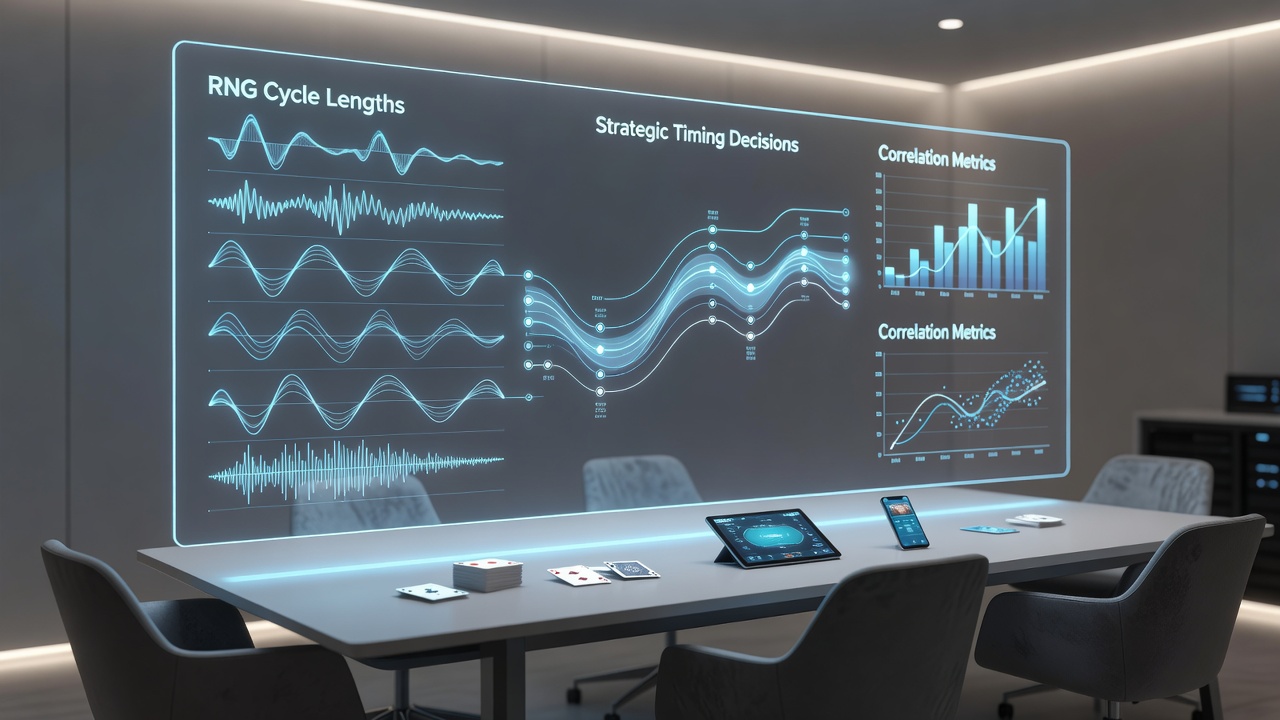
Hybrid digital table environments combine live dealer streams with algorithmic number generation systems, creating platforms where RNG cycle lengths intersect directly with player timing choices in games such as blackjack, roulette, and baccarat. Cycle length refers to the period before a pseudo-random sequence repeats in systems certified for regulated markets, and data from multiple jurisdictions shows these periods often exceed 10^12 iterations in modern implementations approved since 2023.
Technical Foundations of RNG Implementation
Regulators require that RNG engines undergo statistical testing before deployment, with cycle lengths forming one measurable parameter alongside uniformity and independence metrics. The Nevada Gaming Control Board maintains records of approved systems where cycle lengths influence audit protocols, yet operators report that these lengths rarely factor into routine game play except when hybrid interfaces expose timing windows between live feeds and digital overlays. Researchers at institutions including the University of Nevada, Reno have documented how extended cycles reduce detectable repetition patterns within single sessions, though shorter cycles appear more frequently in early-generation mobile table applications still active in certain Asian markets as of mid-2026.
Timing Decisions in Hybrid Settings
Players in hybrid environments often adjust bet placement timing based on observed intervals between card reveals or wheel spins, and certification data indicates that RNG cycle positions can align with these intervals when systems share processing threads across live and simulated components. According to figures released by the New Jersey Division of Gaming Enforcement in their 2025 annual compliance summary, hybrid platforms logged over 2.4 billion RNG calls monthly, with timing deviations averaging under 40 milliseconds in approved configurations. Those who study platform architecture note that strategic timing frequently targets moments when RNG states reset after jackpot triggers or table reshuffles, creating observable correlations in session logs from multi-provider lobbies.
Regional Variations and 2026 Developments
Markets in Australia and Canada apply distinct RNG evaluation standards that emphasize cycle length verification during quarterly audits, and reports from the Australian Communications and Media Authority highlight instances where timing software in hybrid tables required recalibration after cycle-related anomalies surfaced during live testing phases. In July 2026 several operators across Singapore and Macau integrated updated RNG modules with documented cycle lengths exceeding previous generations, coinciding with regulatory updates that mandate real-time logging of timing sequences in hybrid environments. These changes allow oversight bodies to cross-reference player decision timestamps against RNG state histories without altering core game mathematics.

Data Patterns Across Platforms
Studies compiled by the Gaming Standards Association reveal consistent relationships between cycle length categories and observed timing distributions in regulated digital tables, particularly when platforms operate across multiple jurisdictions with shared backend infrastructure. Longer cycles correlate with narrower clusters of high-frequency timing actions during peak hours, whereas shorter cycles appear alongside broader variance in decision intervals according to aggregated telemetry from European operators. Certification protocols further require that any correlation analysis remain independent of individual player identities, focusing instead on aggregate session metrics that regulators review during renewal processes.
Certification and Integrity Measures
Independent testing labs evaluate RNG cycle integrity through extended simulation runs before systems receive approval for hybrid deployment, and evidence from these evaluations shows that timing strategies lose statistical significance once cycle positions exceed typical session durations. The Canadian Gaming Association has published guidelines requiring operators to maintain cycle documentation separate from player-facing interfaces, ensuring that strategic timing tools developed by third parties cannot access state information. Observers note that these separations help maintain compliance across networked venues where hybrid tables serve both regulated and promotional play modes simultaneously.
Conclusion
Correlations between RNG cycle lengths and strategic timing decisions emerge primarily through platform architecture rather than direct game mechanics, with regulatory records demonstrating that certified systems prioritize statistical independence regardless of timing patterns observed in hybrid settings. Data collected through 2026 continues to inform updates to testing standards, allowing platforms to balance operational efficiency with integrity requirements across global markets.