Tracing Certification Protocols for Randomization Systems in Digital Chance Equipment and Their Role in Maintaining Integrity Standards Across Networked Venues
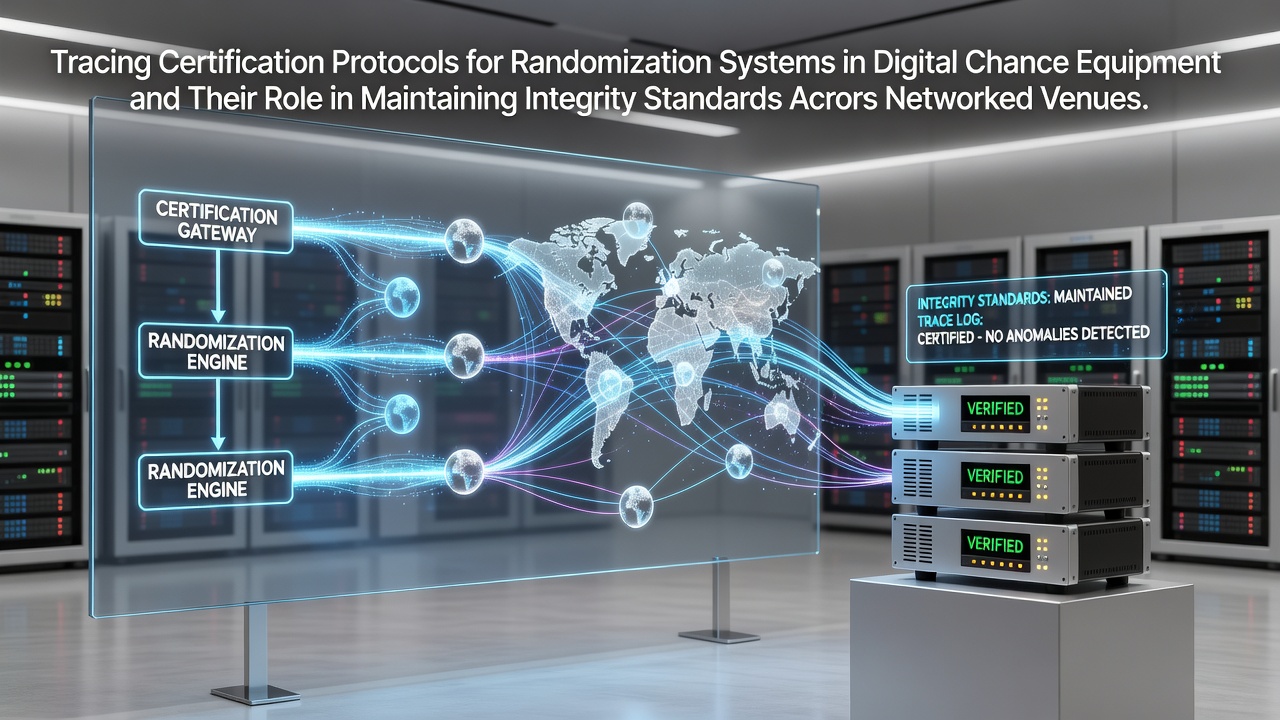
Randomization systems form the backbone of digital chance equipment, and certification protocols trace every layer of their design to verify fairness across networked venues; these processes involve independent laboratories that evaluate algorithms, seed generation methods, and output distributions before any system reaches deployment. Regulatory frameworks in multiple jurisdictions require ongoing audits that monitor live performance, and data from sources such as the Nevada Gaming Control Board shows how continuous statistical sampling detects deviations that could affect game outcomes.
Core Components of RNG Certification
Certification begins with source code review, where testers examine the mathematical models that produce random sequences, and laboratories apply suites of statistical tests including chi-square, runs, and serial correlation analyses to confirm uniformity and independence. Hardware security modules receive separate scrutiny because they protect seed values from external interference, while software-based generators undergo entropy assessments that measure the unpredictability of input sources like thermal noise or system timing events.
Once initial validation clears, periodic re-testing occurs at intervals defined by each licensing authority, and observers note that these checks become especially rigorous when operators expand into multi-jurisdictional networks that connect servers across state or national borders. The process links cryptographic standards such as NIST SP 800-90A with gaming-specific requirements, creating a chain of custody that regulators can follow from development through live operation.
Integration Across Networked Venues
Networked venues rely on centralized randomization servers that feed results to remote terminals or player devices, and certification protocols extend to the communication layer by requiring encrypted channels and timestamp verification that prevent replay attacks or result manipulation. Data indicates that regulators in Australia and Canada coordinate with testing houses to evaluate latency effects, because even millisecond delays can introduce patterns if synchronization between venue nodes fails.
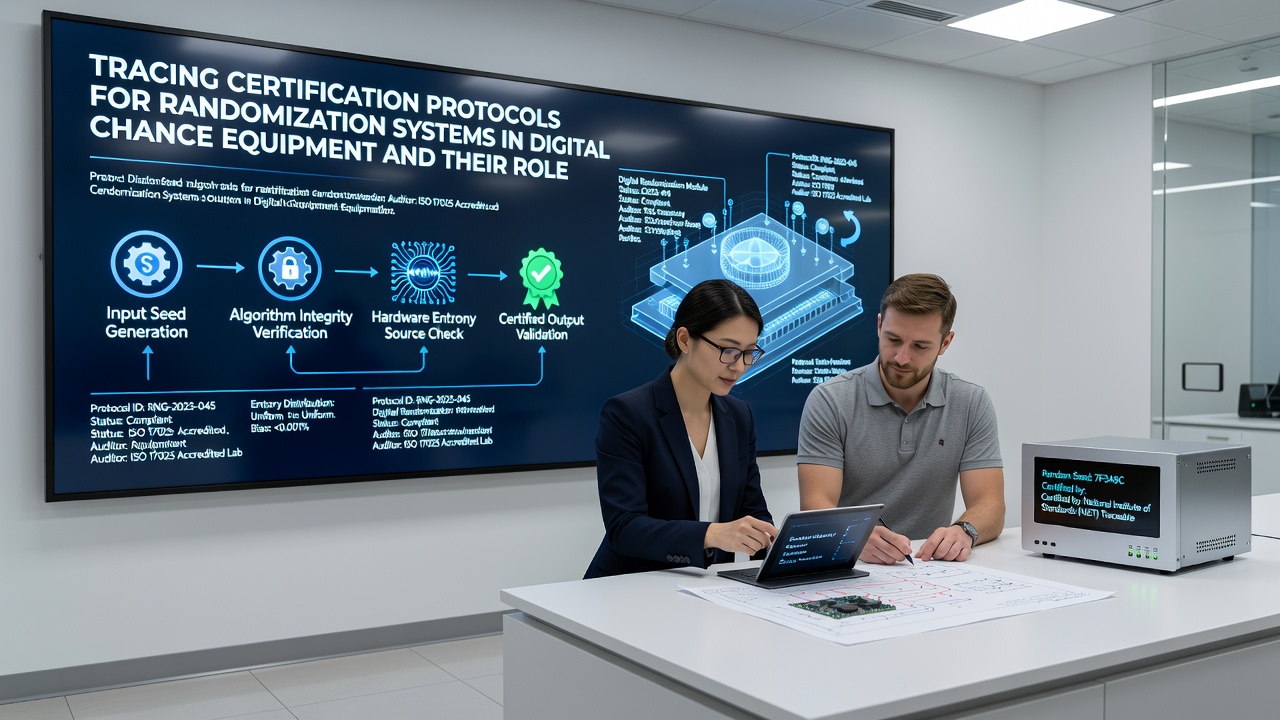
One documented case involved a European operator whose distributed system passed initial certification yet triggered alerts during a 2025 audit when correlation coefficients between two venue clusters exceeded expected thresholds; subsequent investigation traced the issue to a shared hardware clock that introduced subtle bias. Such incidents illustrate why protocols mandate real-time monitoring dashboards that flag statistical anomalies before they accumulate into measurable integrity concerns.
Regulatory Evolution and Technical Standards
Standards bodies continue to refine testing methodologies as computational power increases, and researchers at institutions including the University of Nevada, Reno have published papers examining how quantum random number generators might integrate into future certification frameworks. Current protocols already accommodate hybrid systems that combine classical pseudo-random algorithms with hardware entropy sources, requiring separate validation paths for each component.
Figures from the Malta Gaming Authority reveal that more than 180 RNG submissions underwent full certification cycles in the twelve months ending May 2026, with roughly 12 percent requiring at least one round of corrective adjustments before final approval. These adjustments often involve reseeding mechanisms or expanded test sample sizes that raise confidence intervals without altering game mathematics.
Verification Tools and Audit Practices
Auditors employ automated toolkits that simulate millions of game cycles in compressed timeframes, then compare observed frequencies against theoretical distributions using confidence levels set at 99.9 percent or higher. Live venue inspections supplement these simulations by sampling actual play data transmitted from the network, and any discrepancy prompts deeper forensic review of the randomization pipeline.
Third-party labs maintain sealed archives of certified versions so that operators cannot substitute unapproved code after initial approval, and regulators conduct surprise visits that include binary checksum verification against those archives. This layered approach creates multiple checkpoints that collectively reduce the probability of undetected bias entering active systems.
Conclusion
Certification protocols for randomization systems continue to evolve alongside technological advances in digital chance equipment, and their consistent application across networked venues supports the integrity standards demanded by licensing authorities worldwide. Ongoing collaboration between laboratories, regulators, and operators ensures that verification methods remain aligned with emerging risks while preserving the statistical foundations that underpin player trust in these environments.