Player Adaptation Patterns When Transitioning Between Video Poker Pay Tables and Multi-Provider Table Game Lobbies in Licensed Jurisdictions
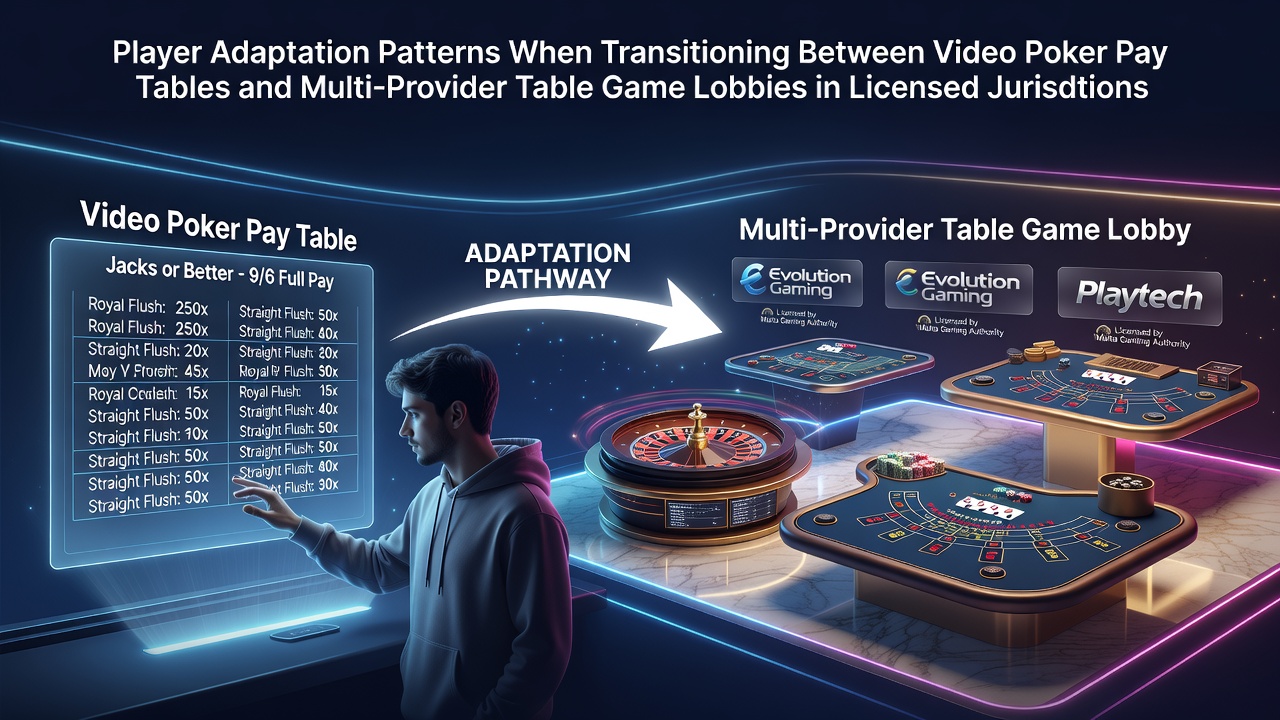 Data from multiple licensed markets shows players adjust their strategies when moving between video poker variants with different payout structures and table game environments hosted by several providers. Observers note these shifts occur because pay tables dictate return percentages while lobby systems introduce varied rulesets and interfaces that require quick recalibration of betting and decision patterns. Video poker pay tables differ significantly across machines and platforms, with full-pay versions offering higher returns on specific hands compared to lower-paying alternatives. Research from regulatory filings indicates players often scan for optimal tables first, allocating more time to those with 9/6 or 10/7 Jacks or Better configurations before committing bankroll portions. This initial evaluation phase typically lasts several sessions as individuals test how changes in payout frequency affect session length and variance exposure.
Key Shifts in Decision-Making During Transitions
When players enter multi-provider table game lobbies, they encounter blackjack, roulette, and baccarat options with distinct rule variations and dealer speeds that contrast with the solitary pace of video poker. Studies from North American gaming commissions reveal adaptation involves recalibrating bet sizing because table minimums and maximums often exceed video poker coin denominations, forcing adjustments in risk tolerance within the first few rounds of play.
Those who track historical data from Pennsylvania and New Jersey platforms find that session logs frequently show increased use of basic strategy charts during early table game exposure, whereas video poker relies more on memorized optimal play algorithms tied directly to each pay table. The transition period averages between three and seven sessions according to aggregated operator reports, after which decision speed stabilizes as muscle memory incorporates new interface elements like auto-hold functions or side bet toggles.
Observed Patterns Across Jurisdictions
Licensed operators in Atlantic City and Las Vegas report similar behavioral clusters where high-frequency video poker users initially reduce table game wager amounts by 20 to 30 percent upon switching, then gradually increase stakes once they confirm rule consistency across providers. This cautious ramp-up correlates with regulatory requirements for transparent game rules that allow players to cross-reference pay tables and house edges before committing larger amounts.
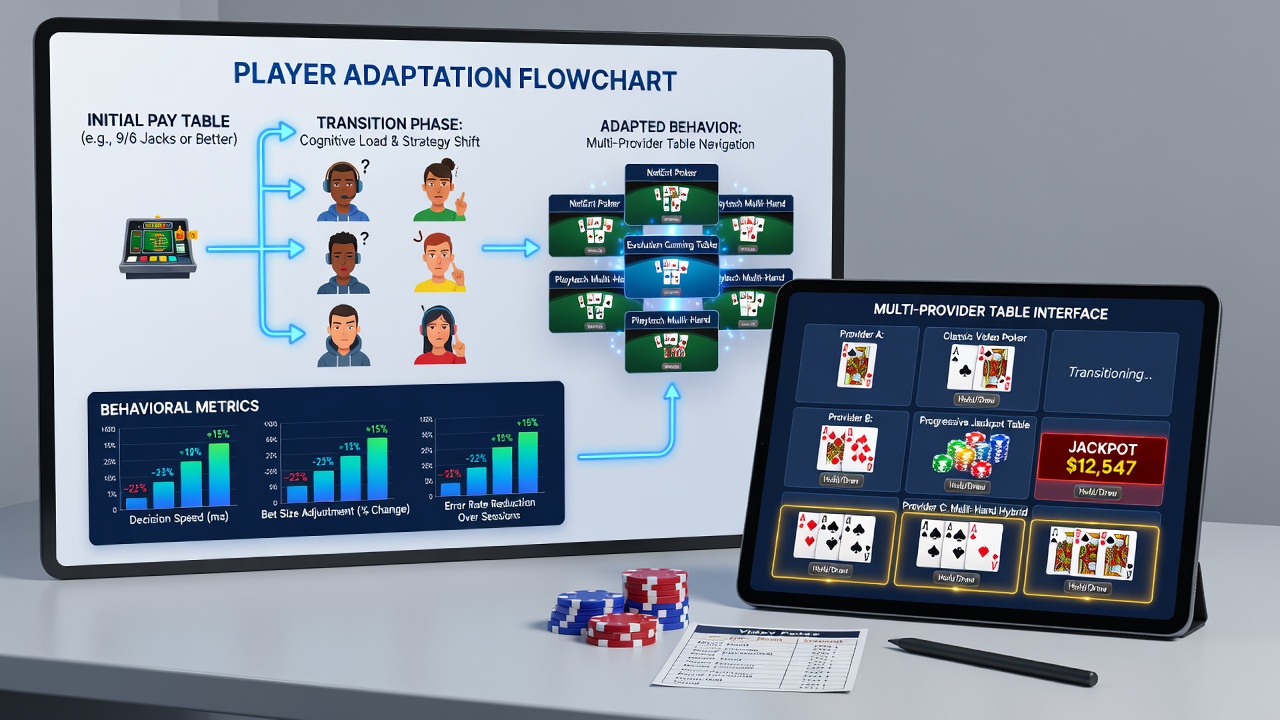
July 2026 data releases from several state regulators highlighted a measurable uptick in cross-format play following software updates that unified account balances across video poker and table sections. Players demonstrated faster adaptation when lobby filters allowed sorting by return percentage or volatility metrics, reducing the time needed to identify favorable options from an average of 12 minutes to under 5 minutes per session.
Canadian provincial data further illustrates how players leverage loyalty tracking tools to monitor performance across both formats, often exporting hand histories to identify which pay tables align best with their bankroll allocation habits before entering live dealer environments. These tools help quantify the impact of provider-specific shuffling algorithms and betting limits that differ from standalone video poker terminals.
Factors Influencing Adaptation Speed
Interface familiarity plays a substantial role because multi-provider lobbies frequently employ standardized navigation menus that reduce cognitive load once players master one provider's layout. Reports from the Nevada Gaming Control Board indicate users who spend initial sessions observing autoplay features or practice modes transition more efficiently, maintaining consistent hourly decision rates when moving back to video poker formats.
Bankroll segmentation emerges as another consistent pattern, with players dividing funds into separate pools for pay table hunting versus table game engagement to account for differing variance profiles. Academic analyses from institutions tracking gambling behavior confirm this segmentation reduces session-ending drawdowns during the adjustment window by preserving capital for formats with slower payout cycles.
Regulatory Context and Platform Design
Licensed jurisdictions mandate clear disclosure of pay table values and game rules, which supports faster player adaptation by providing accessible reference materials within the lobby interface itself. Operators responding to these requirements have introduced comparison tools that display multiple providers' offerings side by side, allowing direct evaluation of expected returns without external calculation.
Platform updates scheduled through mid-2026 have incorporated real-time variance indicators that help users anticipate how table game outcomes might deviate from video poker patterns they already understand. Such features appear in multiple markets where regulators require standardized reporting of game mathematics, enabling players to apply existing knowledge across formats with minimal additional learning.
Conclusion
Patterns documented across licensed environments demonstrate that players develop transferable skills when navigating pay table differences and multi-provider features, with adaptation timelines shortening as platforms improve transparency and filtering options. Data collected through 2026 continues to show measurable efficiency gains once individuals establish consistent evaluation routines that apply equally to video poker and table game selections. These behaviors reflect the structural realities of regulated systems rather than individual preferences, highlighting how design elements and oversight frameworks shape cross-format engagement over time.