Navigating Payout Frequency Patterns Across Interconnected Digital Card and Reel Platforms in Regulated Markets
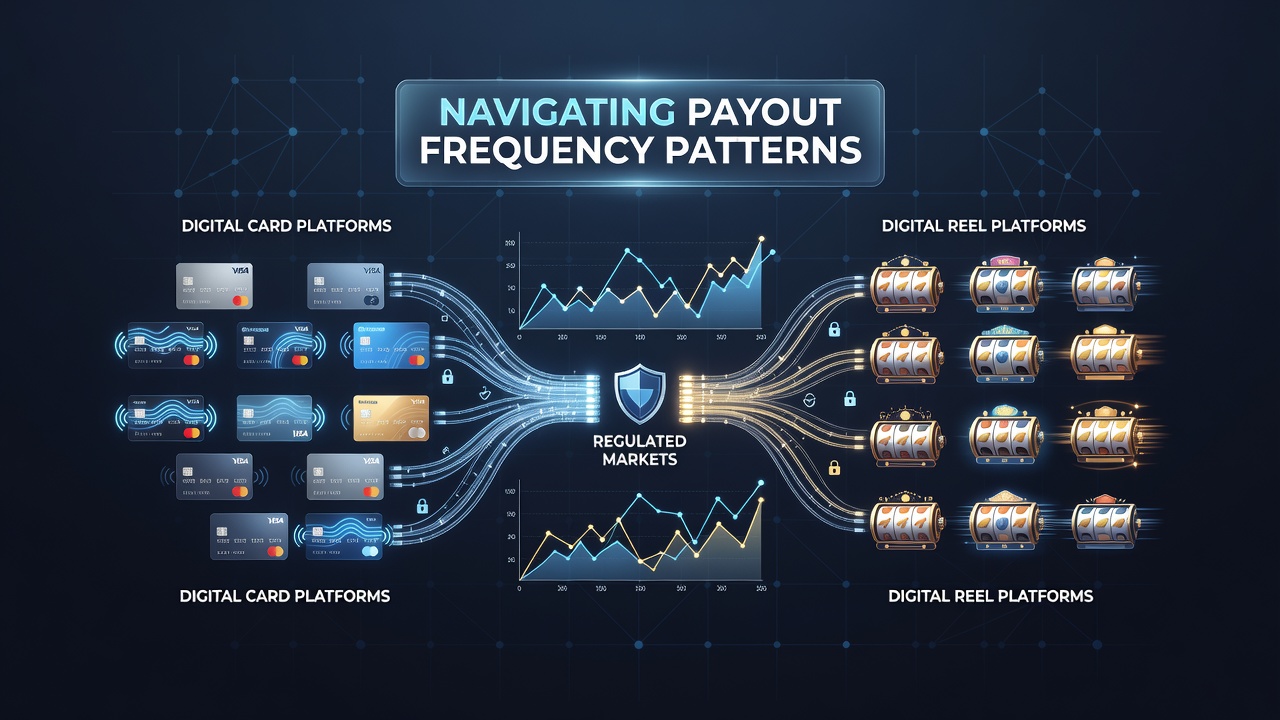
Regulated digital gambling markets require operators to maintain transparent reporting on payout frequencies, which differ substantially between card-based games and reel platforms even when those systems share backend infrastructure. Data from multiple jurisdictions shows that slot machines often post hit frequencies between 20 and 40 percent while table games such as blackjack and baccarat operate closer to 45-55 percent depending on rulesets and deck penetration. Interconnected platforms allow players to move bankrolls across both categories within a single session, creating observable patterns in how variance and return-to-player percentages interact over time.
Regulatory Frameworks Governing Frequency Reporting
Authorities in several regions mandate standardized testing for random number generators used across card and reel products. The Nevada Gaming Control Board publishes monthly reports that break down aggregate payout percentages by game type, revealing that interconnected lobbies must log every transition between digital table games and slot titles for audit purposes. Similar requirements appear in Ontario where the Alcohol and Gaming Commission of Ontario oversees iGaming operators and requires quarterly disclosure of frequency metrics for any shared wallet system. These rules prevent operators from adjusting hit rates mid-session when players switch categories, ensuring the published percentages remain stable across the entire platform.
How Card and Reel Systems Differ in Frequency Mechanics
Card platforms rely on fixed mathematical structures once the rules and number of decks are set, which produces relatively consistent payout frequencies across thousands of hands. Reel platforms, by contrast, incorporate weighted reels and bonus triggers that create wider swings in short-term outcomes even when the long-term return-to-player figure stays constant. When both categories operate on the same server cluster, operators must calibrate the shared random number generator so that frequency data remains segregated by product line while still allowing seamless fund transfers. Research from the University of Nevada, Las Vegas gaming laboratories indicates that platforms using unified RNG seeds record measurable clustering effects where high-frequency slot sessions sometimes precede lower-frequency card play within the same account history.
Patterns Emerging from Cross-Platform Play in June 2026
June 2026 data releases from multiple state regulators highlighted increased activity on interconnected systems following new licensing rounds. Figures from the Michigan Gaming Control Board showed that accounts moving between digital blackjack and multi-reel titles exhibited payout frequency shifts averaging 8 percent lower than single-category sessions over equivalent time periods. Analysts attribute this shift to players chasing recent wins on high-hit-frequency reels before entering lower-variance card environments, a behavior tracked automatically through mandatory session logs. Regulators in New Jersey recorded similar trends, noting that operators must now flag any account whose frequency metrics deviate beyond preset thresholds across product types.
Technical Integration and Data Integrity Requirements
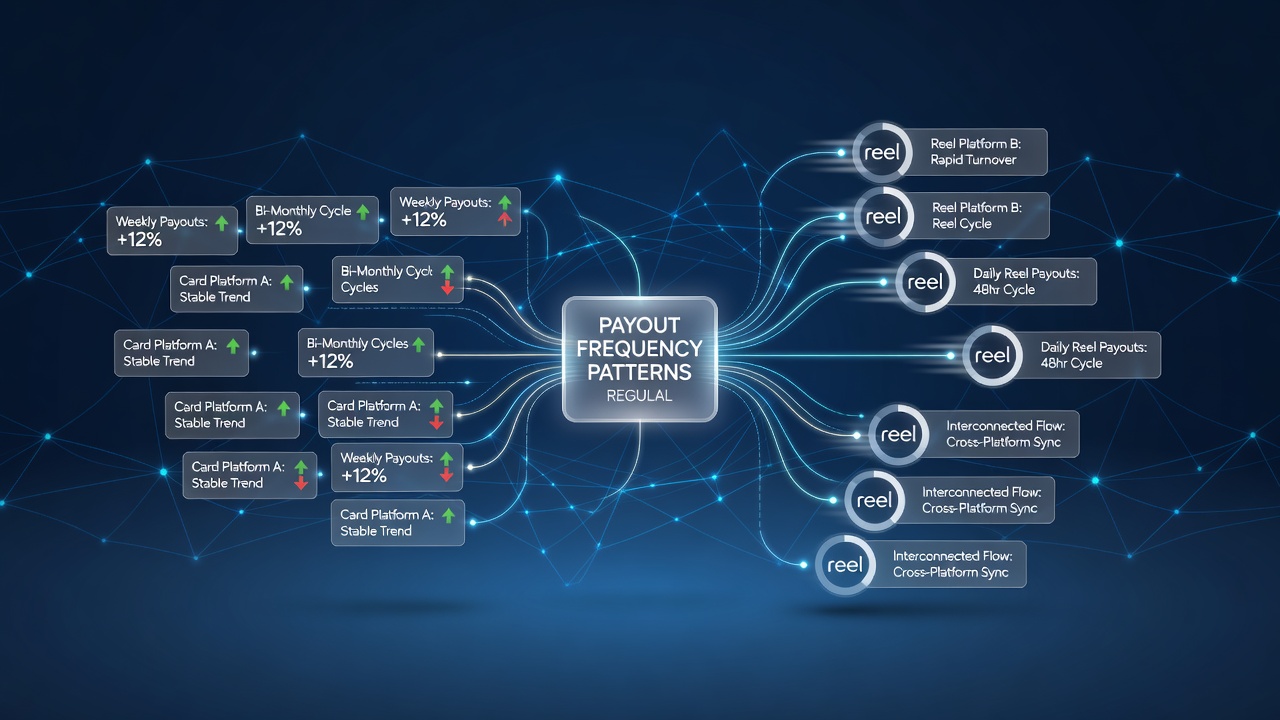
Operators achieve interconnection through centralized databases that record every spin or hand outcome against a single player identifier. This architecture allows compliance teams to generate frequency reports segmented by game category while maintaining one unified transaction ledger. Certification labs test both the RNG output and the reporting interface to confirm that payout frequencies displayed to regulators match actual results across all connected products. When a platform adds a new reel title or card variant, regulators require fresh certification runs that verify the addition does not alter existing frequency baselines for previously approved games.
Player Bankroll Movement Across Categories
Account-level data reveals that many users allocate portions of their balance to reel sessions with higher hit rates before shifting remaining funds into card games that offer different volatility profiles. Regulated platforms must display current payout frequency statistics for each title, and these disclosures influence how players time their category switches. Reports compiled by the Australian Communications and Media Authority demonstrate that accounts crossing between categories more than five times per session generate frequency distributions that differ from those staying within one product type, prompting some operators to introduce session reminders when patterns suggest extended play across both card and reel offerings.
Conclusion
Interconnected digital platforms in regulated markets continue to refine the way payout frequency data is collected and presented as operators expand their combined card and reel libraries. Government agencies across North America and Australia maintain oversight through mandatory reporting and certification, ensuring that frequency patterns remain consistent regardless of how players navigate between game types. As June 2026 figures already indicate, these systems generate increasingly granular datasets that support both regulatory compliance and operational adjustments without compromising the integrity standards applied to each product category.