Examining Decision Trees in High-Stakes Blackjack Variants Offered by Digital Platforms
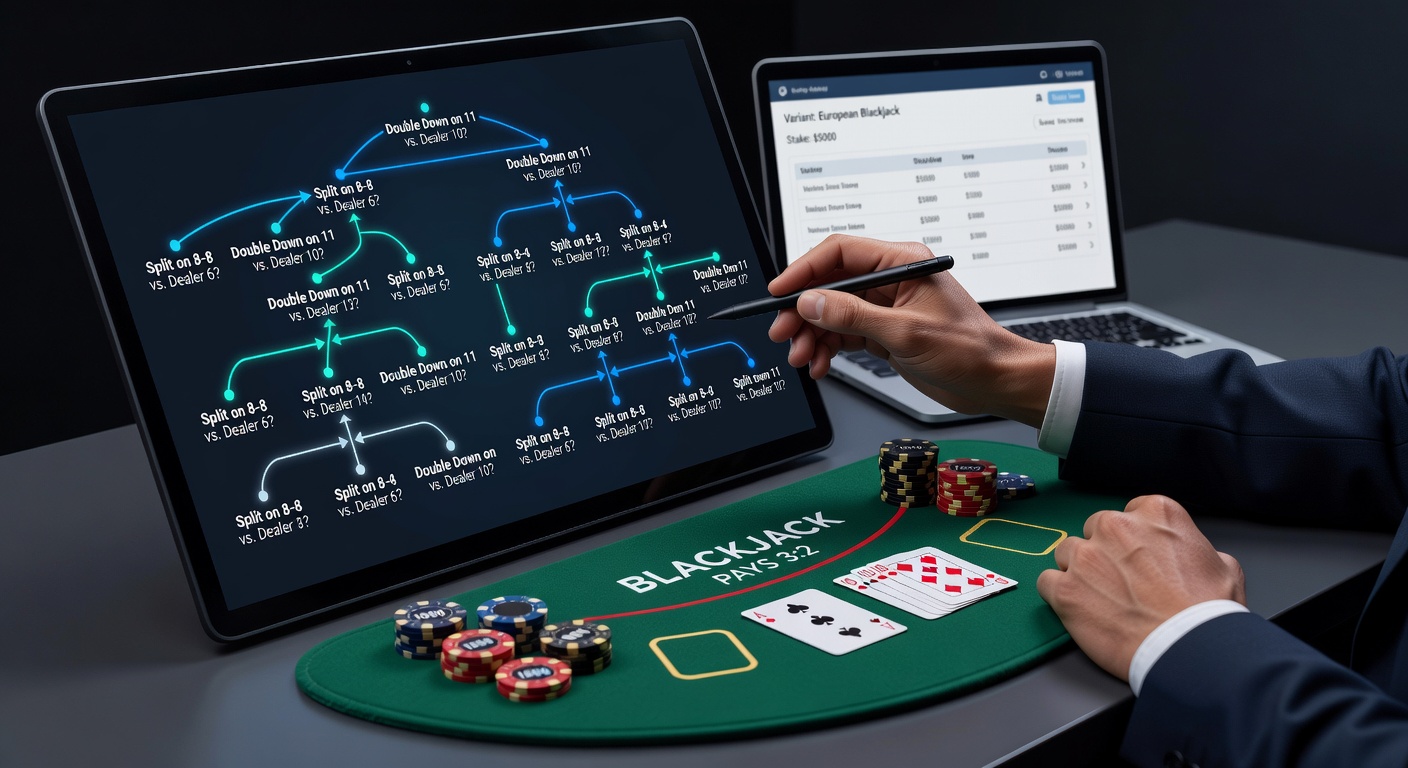
Decision trees provide structured frameworks that map out every possible action in blackjack based on specific card combinations and rulesets, allowing systematic evaluation of moves like hitting, standing, doubling, or splitting across multiple deck configurations and payout structures common in high-stakes digital variants.
Core Mechanics of Decision Trees Applied to Blackjack
Researchers map these trees as branching diagrams where each node represents a player hand total paired with a dealer upcard, while branches indicate optimal responses derived from probability calculations that account for remaining deck composition and house rules, and data from large-scale simulations shows how such models reduce house edge in variants with rules like early surrender or multiple split options. Those who study algorithmic approaches note that trees expand rapidly in complexity when platforms introduce side bets or progressive jackpots, requiring additional layers that factor in expected value shifts from bonus triggers, yet simplified versions still guide play in real-time interfaces by highlighting paths that maximize returns under fixed conditions.
High-Stakes Variants Popular on Digital Platforms in Mid-2026
Online operators rolled out several blackjack adaptations during the first half of 2026 that incorporate rule tweaks designed to attract larger wagers, including single-deck games with 3:2 payouts alongside multi-hand options that allow simultaneous play across separate decision trees, and figures from industry tracking services indicate these formats saw increased traffic on platforms licensed in regulated markets. Variants such as Spanish 21 and Double Exposure appear frequently because their altered deck compositions and face-up dealer cards create distinct branching patterns that reward precise tree-based analysis, while live-dealer streams add timing variables that automated tools integrate into updated models refreshed daily to reflect shuffle frequencies.
Integration with Platform Technology
Digital providers embed decision-support overlays directly into interfaces for high-limit tables, enabling users to reference tree outputs without leaving the game window, and this setup draws from probability engines that recalculate branches after each card reveal using real-time deck tracking algorithms. Observers note that European operators often comply with data protection standards set by bodies like the Malta Gaming Authority when logging player interactions with these tools, whereas North American sites reference guidelines from the New Jersey Division of Gaming Enforcement to ensure transparency around automated recommendations, creating regional differences in how trees are presented and updated.

Data Sources and Simulation Methods
Analysts rely on Monte Carlo simulations that run millions of hands to populate tree nodes with expected values, producing outputs that adapt to rule changes such as dealer stand-on-soft-17 or restrictions on doubling after splits, and a 2025 academic paper hosted by the University of Sydney details how these methods apply to Asian-market variants featuring additional insurance options. Platforms in June 2026 began incorporating machine-learning refinements that prune less relevant branches from full trees, speeding up calculations during live sessions while maintaining accuracy for stakes exceeding standard table limits, and this evolution aligns with reports issued by the Singaporean Casino Regulatory Authority on technology standards for responsible gaming features.
Take one documented case where a European platform tested tree-assisted interfaces across 50,000 sessions and recorded measurable shifts in player retention metrics tied to clearer strategic guidance, though results varied by variant complexity and user familiarity with the underlying logic. Those analyzing retention patterns further observe that trees prove especially useful in games with frequent rule rotations, since they allow quick reconfiguration without full manual recalculation.
Challenges in High-Stakes Digital Implementation
Network latency and regulatory requirements around fair play introduce constraints that affect how decision trees render during peak hours, prompting developers to prioritize lightweight versions that focus on core branches while offering deeper exploration through separate analysis portals. Research indicates that players accessing these resources on mobile devices encounter condensed diagrams optimized for smaller screens, and the approach maintains fidelity to original probability data derived from exhaustive enumeration of card outcomes.
Conclusion
Decision trees continue to shape strategy development for high-stakes blackjack variants across digital platforms by offering clear visual and computational pathways through complex rule sets, and ongoing refinements in simulation techniques alongside regulatory oversight from diverse jurisdictions support their integration into both player tools and platform analytics. As operators expand offerings through mid-2026, these models remain central to understanding optimal responses under varying conditions, providing a foundation for consistent evaluation regardless of specific game modifications.