Charting Seasonal Fluctuations in Table Traffic Across Regional Poker Circuits and Their Ties to Promotional Structures
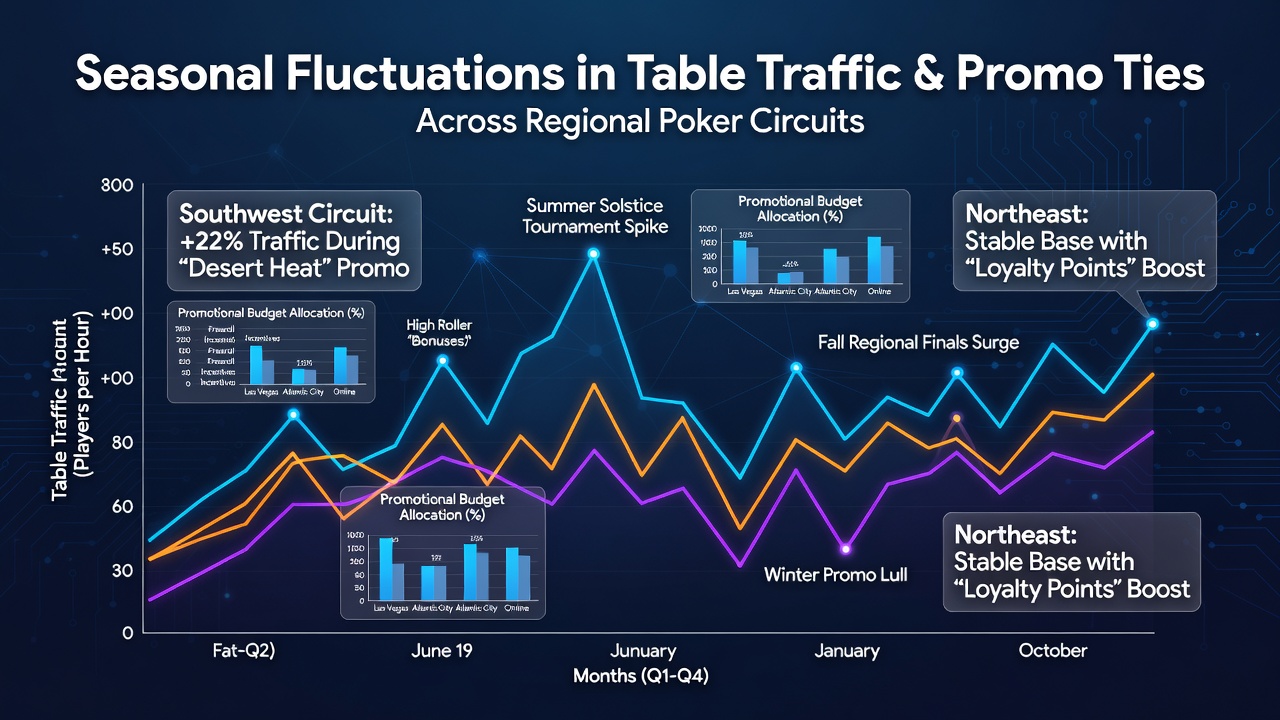
Regional poker circuits display distinct patterns in table traffic that shift with the calendar, and these movements align closely with targeted promotional structures designed to stabilize participation across slower periods. Data from multiple jurisdictions shows peaks during major tournament series and dips in shoulder seasons, while operators respond with deposit matches, freeroll entries, and loyalty multipliers that redistribute player volume.
Mapping Traffic Patterns Across Key Regions
North American circuits experience pronounced summer surges tied to the World Series of Poker schedule, when thousands of additional tables open in Las Vegas and satellite events draw players from smaller venues. Observers note that traffic in secondary markets such as Atlantic City and California card rooms declines during these same months, as players migrate westward. European circuits follow a different rhythm, with spikes around the European Poker Tour stops in spring and fall, whereas summer months see reduced footfall at local clubs because players travel to larger festivals.
Asian circuits, particularly those in Macau and Manila, record steadier year-round numbers because tourism flows remain consistent, yet promotional overlays still produce measurable lifts during holiday periods. Research from the Macau Gaming Inspection and Coordination Bureau indicates that table utilization rates rise when operators introduce limited-time satellite packages that feed into international events.
Promotional Structures as Traffic Regulators
Promotions function as deliberate counters to natural seasonal decline. Summer freerolls in North America, for instance, encourage recreational players to fill seats during weekday daytime hours when business travelers are absent. In contrast, European operators often deploy reload bonuses timed for early autumn, when tournament traffic begins to rebuild after vacation periods.
Those who track player databases report that multi-tiered loyalty programs create compounding effects: players who earn points during high-traffic festivals receive bonus entries that keep them active during quieter weeks. This mechanism smooths revenue curves for card rooms without requiring constant new customer acquisition.
Data Sources and Measurement Approaches
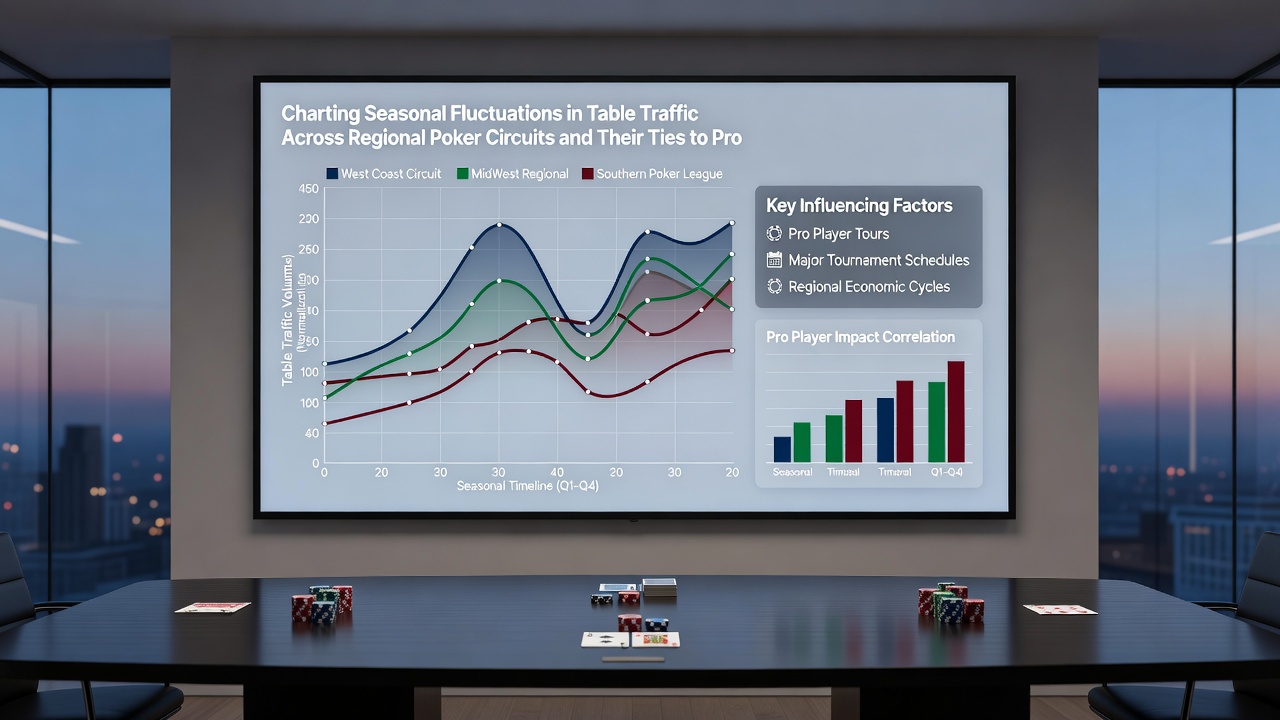
Traffic metrics come from floor counts, reservation systems, and aggregated hand histories supplied by venue networks. The New Jersey Division of Gaming Enforcement publishes monthly reports that break out live poker tables separately from other table games, allowing direct comparison of seasonal occupancy rates. Similar granularity appears in reports issued by the California Gambling Control Commission, which tracks average daily players per table across tribal and commercial properties.
Industry associations compile cross-regional indices that correlate promotion calendars with traffic deltas. These datasets reveal that a well-timed deposit match can offset up to 30 percent of typical summer drop-off in mid-tier venues, while poorly timed offers produce negligible movement because they overlap with competing festivals elsewhere.
July 2026 Observations in Context
During July 2026, circuits in the American Southwest recorded elevated table counts driven by ongoing series events, whereas Midwest card rooms reported flatter numbers until targeted mid-month promotions activated. Operators in these regions adjusted satellite structures to feed directly into larger festivals, creating feeder traffic that maintained utilization rates above seasonal baselines. European venues, meanwhile, leaned on loyalty reload campaigns to retain players who had returned from international travel.
Conclusion
Seasonal fluctuations in regional poker traffic follow predictable geographic rhythms, and promotional structures serve as calibrated responses that redistribute volume across the calendar. Measurement frameworks from regulatory bodies and industry associations supply the data needed to refine these interventions, while circuits continue to adapt offers to local player behavior and competing events. The interplay between traffic data and promotion timing remains central to operational planning across all major poker markets.